
Curating Open Shelves Like a Pro
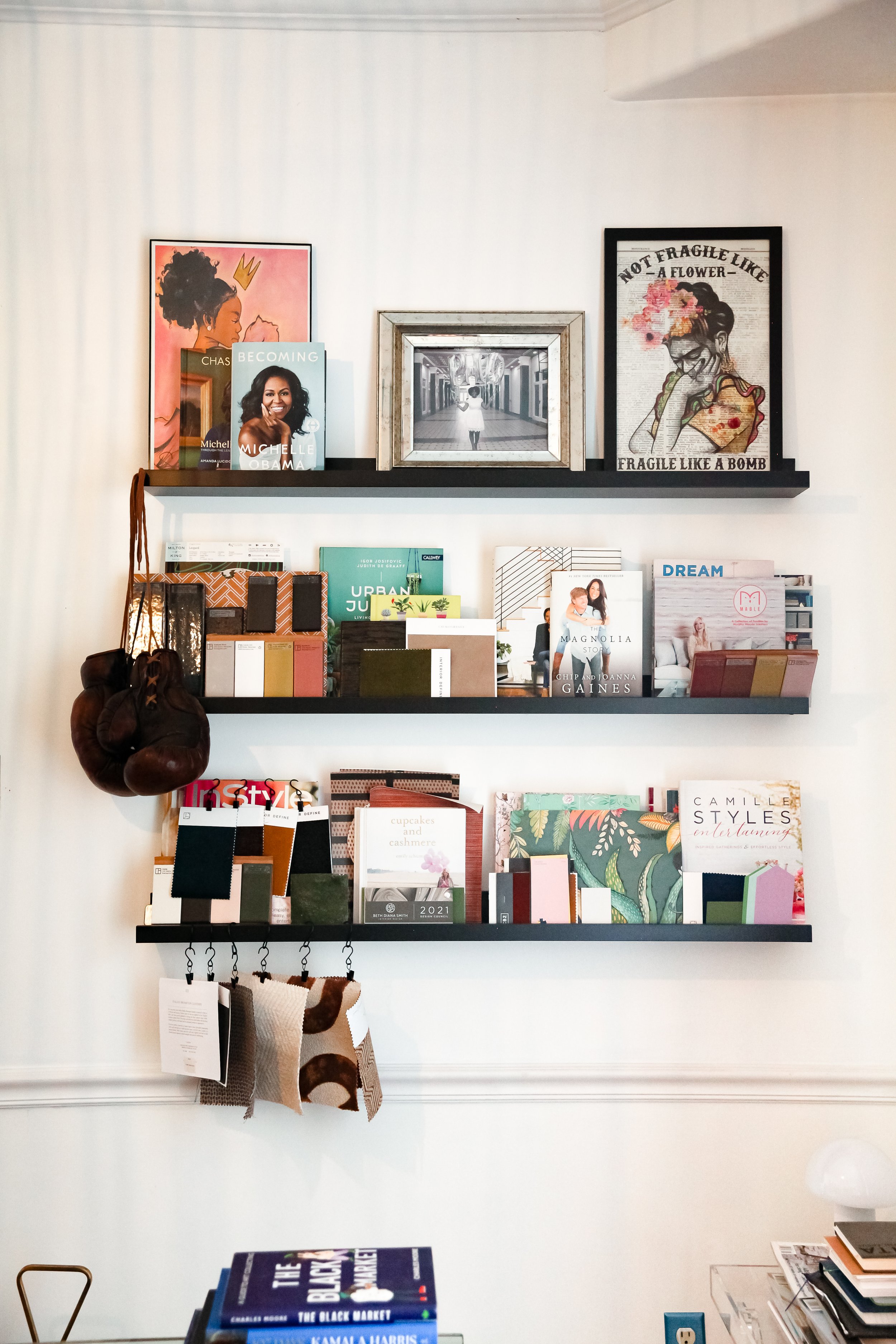
All images taken by Kim Thomas of KP Fusion.
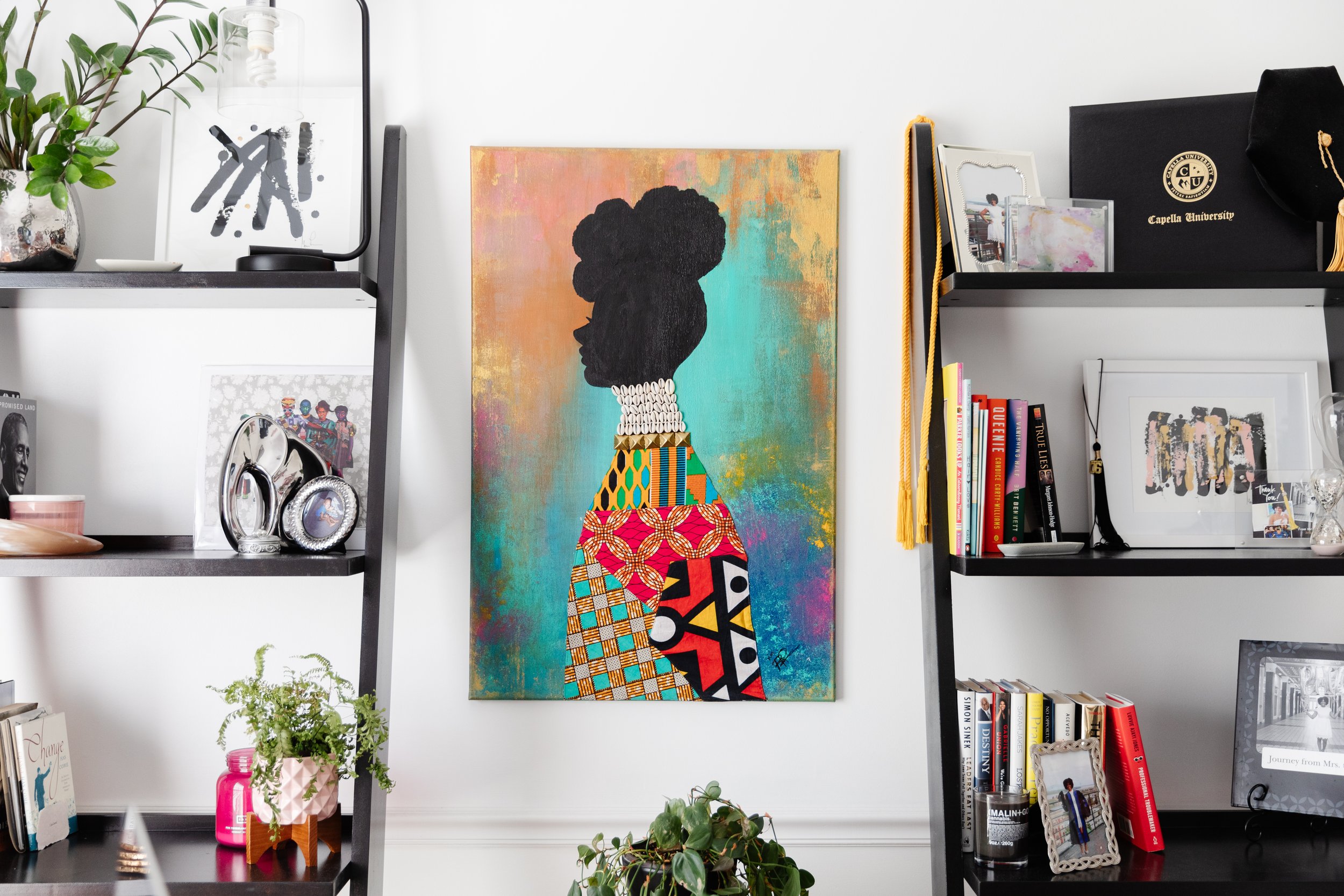
I love using open shelving in my own home and in my clients’ spaces as an opportunity to bring in character, warmth, and texture. Shelves are one of my favorite places to layer personality — they allow a space to feel collected rather than styled all at once.
I often reach for a mix of coffee table books, a curated art collection, meaningful finds from travels, and family photos that tell a story. These pieces add depth and soul, making the shelves feel lived-in and personal.
And there will always be greenery. Whether it’s a trailing plant, a small potted moment, or a branch clipped from the yard, greenery brings life and softness to open shelving. It’s the element that connects everything and keeps the space feeling fresh and grounded.
When styled thoughtfully, open shelves become more than storage — they become a reflection of how you live and what you value.
Here’s how to elevate your open shelves.
Open shelving can instantly elevate a space — when done with intention. When done without a plan, it can just as easily feel cluttered, chaotic, or unfinished. The difference isn’t about having “more” beautiful things; it’s about knowing what to show, what to edit, and how to create balance.
I’ve always viewed open shelves as a visual story. They’re an opportunity to layer texture, showcase personality, and let your home feel lived-in yet thoughtful. Here’s how I curate open shelves so they feel intentional, elevated, and timeless.
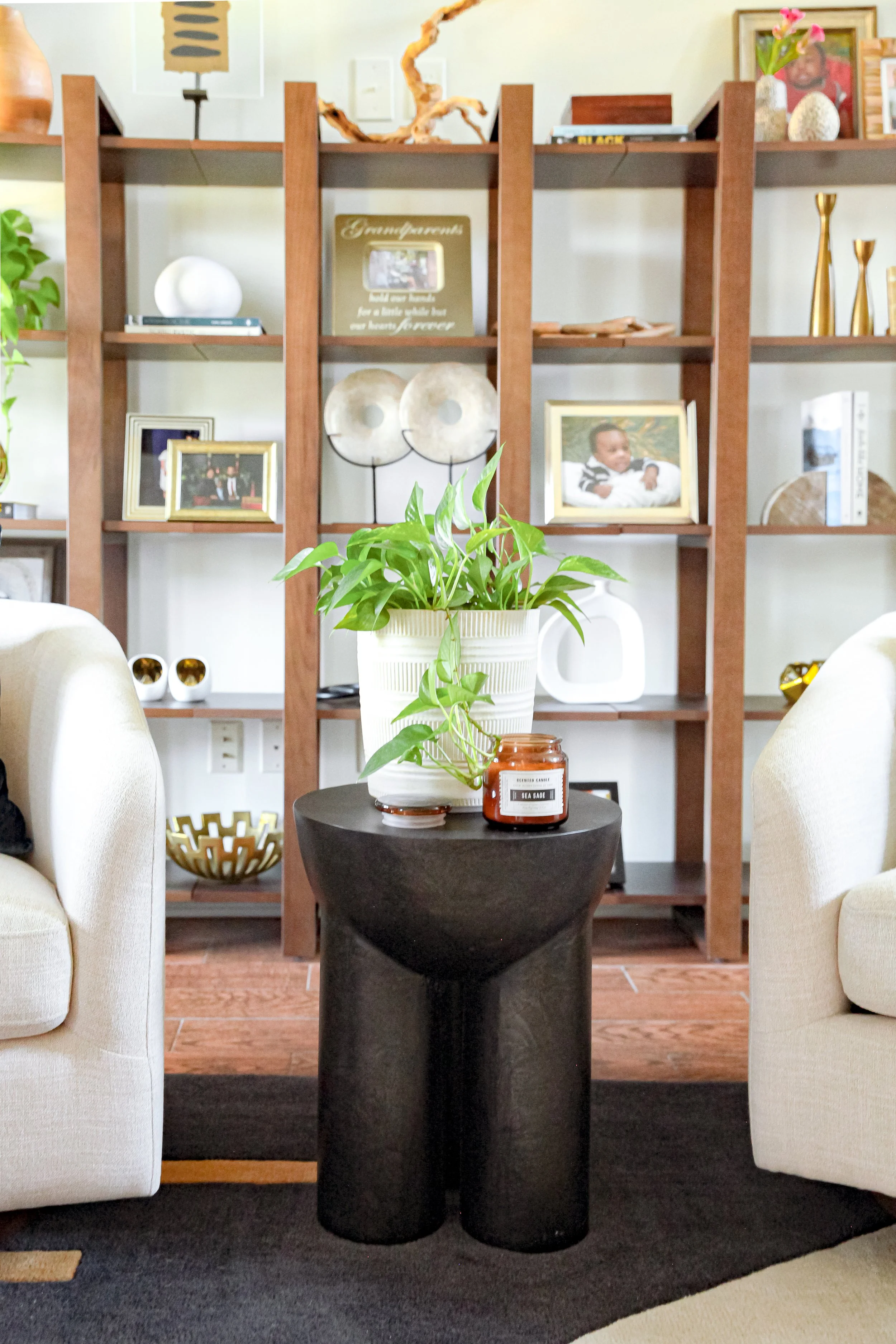
Let it tell your story.
Open shelving at a client’s home gave me the opportunity to display their family photos, plants, coffee table books, and decorative items.
1. Start With a Clean Slate
Before styling anything, clear your shelves completely. This step matters more than most people realize.
Starting fresh allows you to:
See the scale of the shelves
Edit what no longer fits your aesthetic
Avoid forcing items to “work”
Think of this as a reset — just like refining a room, you’re refining the story your shelves will tell.
2. Choose a Cohesive Color Palette
A well-curated shelf almost always has a subtle color story. This doesn’t mean everything must match, but there should be a sense of harmony.
I often lean into:
Neutrals as a base (cream, white, black, wood tones)
One or two accent colors repeated throughout
Natural materials to soften the look
This keeps shelves feeling calm and intentional rather than visually loud.
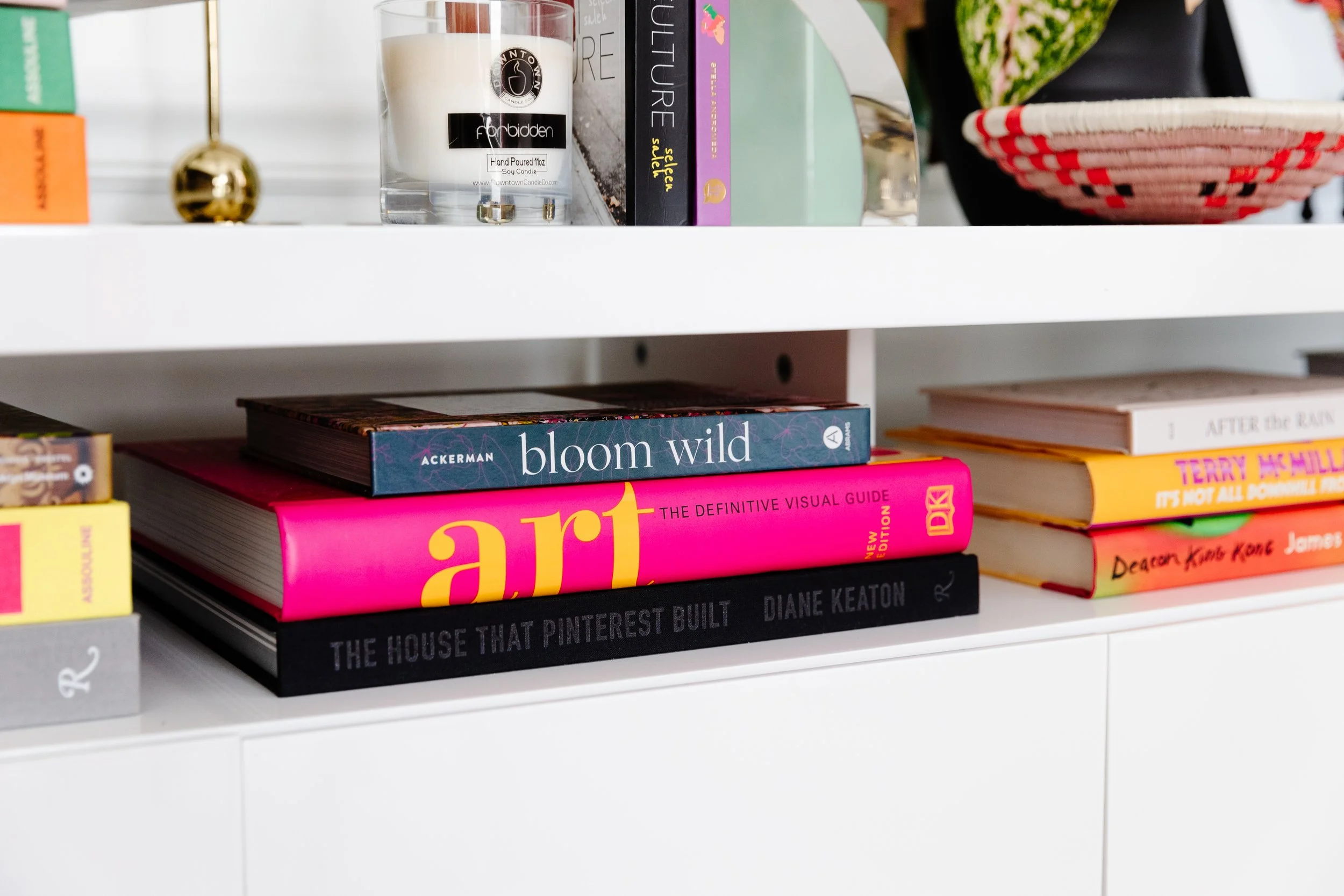
3. Mix Heights, Shapes, and Textures
The key to shelves that feel styled (not staged) is variation.
I like to layer:
Tall objects (vases, framed art, vessels)
Medium elements (bowls, stacked books)
Small accents (objects, sculptural pieces)
Then I mix textures — ceramic, wood, glass, paper, and metal — to add depth. Texture is what keeps shelves interesting even when the color palette is restrained.
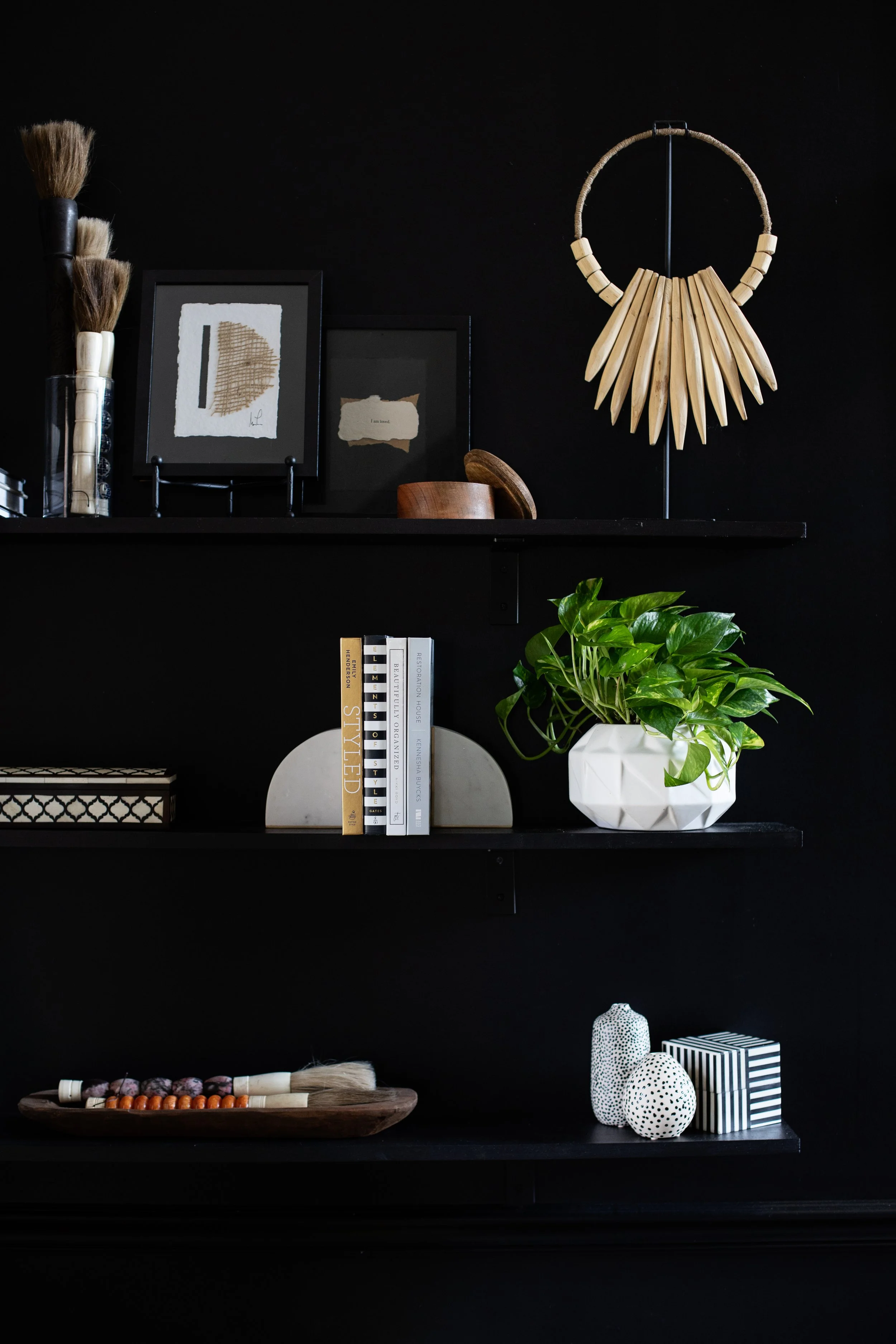
4. Use Books as Anchors
Books are one of my favorite shelf-styling tools. They ground the space and add personality.
Ways to style them:
Stack horizontally and top with an object
Mix vertical and horizontal placements
Use book spines as subtle color blocks
Books don’t have to be decorative only — they can reflect your interests, travels, and creativity.
5. Layer in Art and Personal Pieces
Open shelves shouldn’t feel generic. This is where personality comes in.
Incorporate:
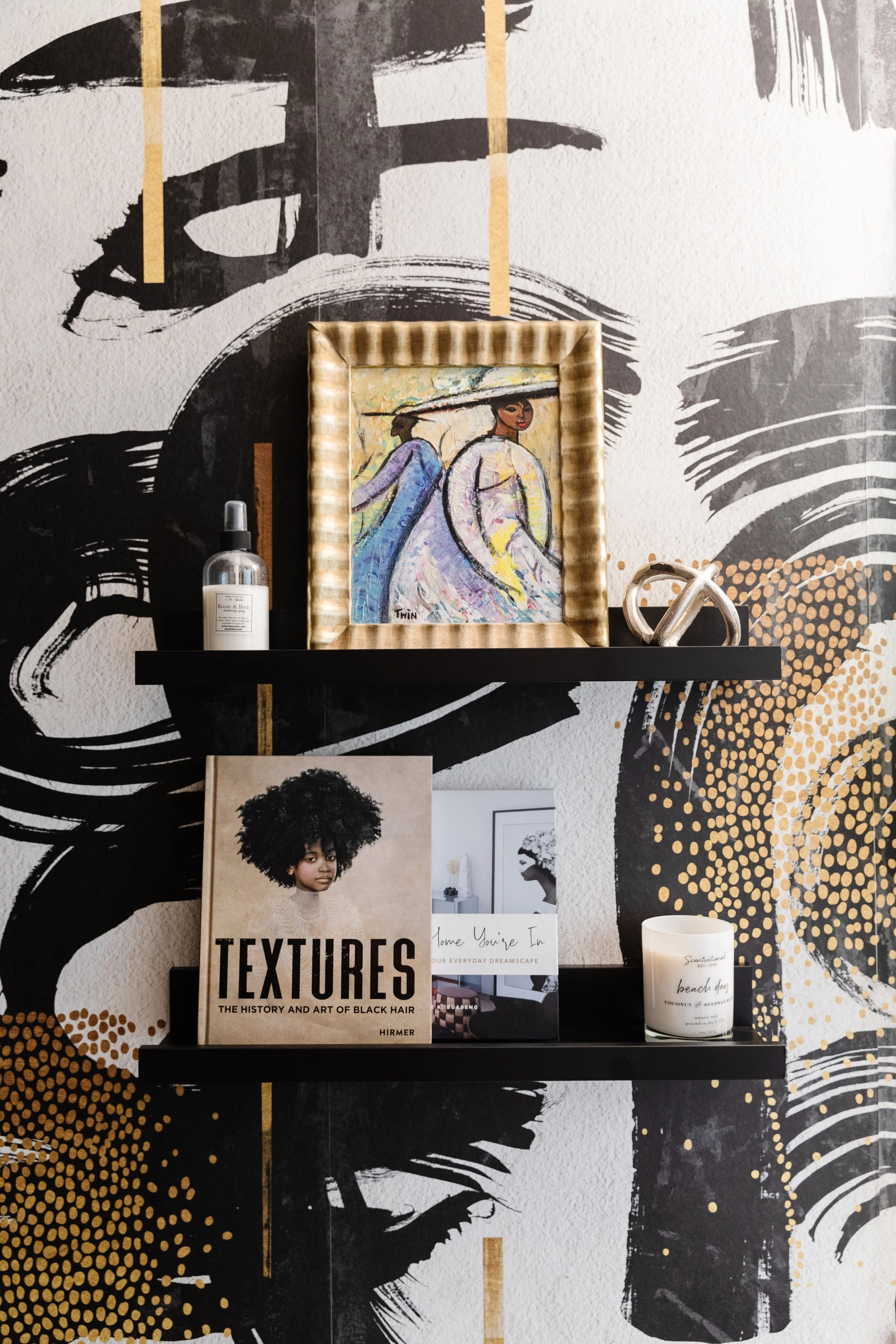
Framed art or photography (leaned, not always hung)
Objects collected over time
Pieces that hold meaning or tell a story
These elements make your shelves feel intentional and uniquely yours.
6. Embrace Negative Space
One of the most overlooked elements of good shelf styling is rest. Every shelf doesn’t need to be full.
Leaving space allows:
The eye to breathe
Key pieces to stand out
The shelves to feel elevated instead of cluttered
Remember, refinement often shows up in what you choose not to display.
7. Edit Often
Shelves are meant to evolve. I revisit mine seasonally — sometimes swapping pieces, sometimes removing items altogether.
Ask yourself:
Does this still feel aligned?
Is this piece adding value to the story?
Does the shelf feel balanced?
Curating is an ongoing process, not a one-time task.
Final Thoughts
Curating open shelves like a pro isn’t about perfection. It’s about intention, balance, and storytelling. When styled thoughtfully, shelves become more than storage — they become a reflection of how you live, what you love, and what you choose to highlight. Start slow. Edit often. Trust your eye. Your shelves don’t need to impress — they need to feel like home.